1,200 km. One pilot. Three tanks of fuel. No landing.
Carlos I. Peña is going after the paramotor trike world distance record, riding the Patagonian wind from the Andes to the Pampas. The current record has stood since 2005.
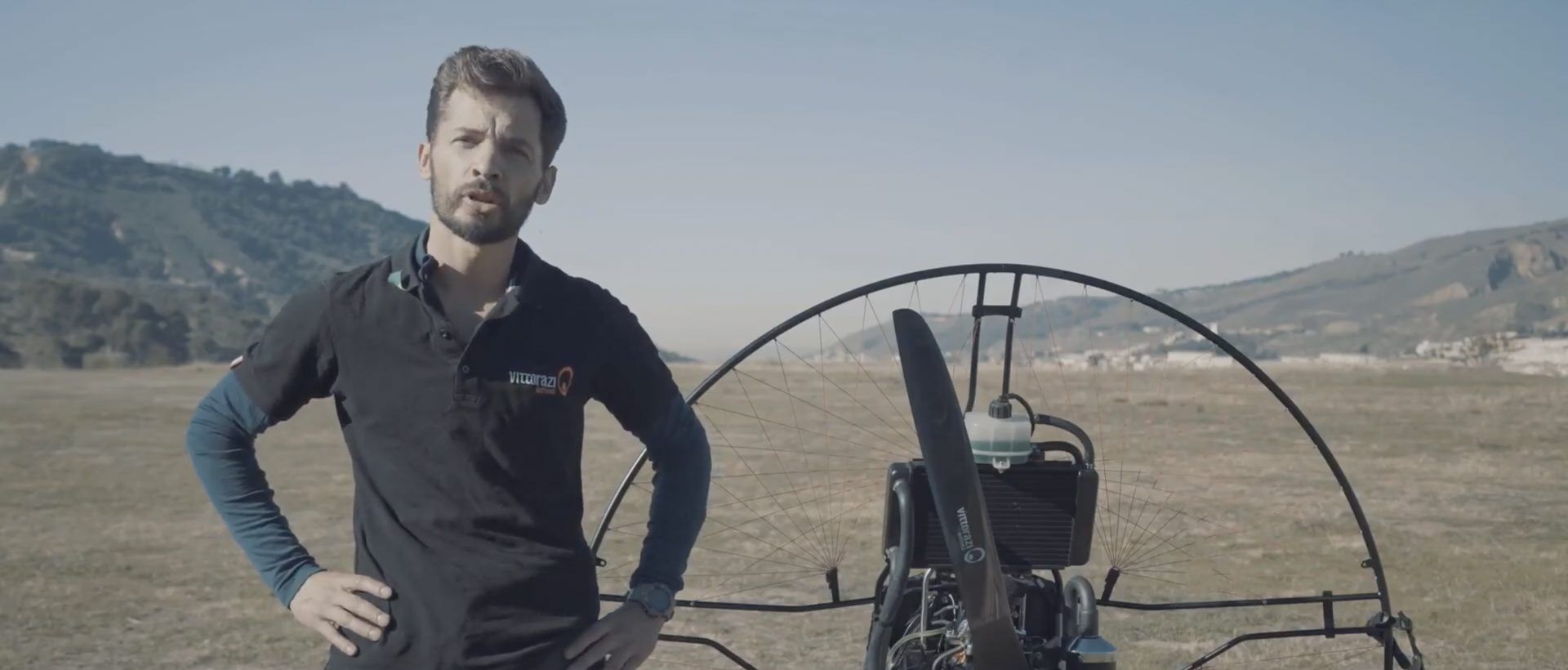
From the Andes to the Pampas, riding the Patagonian wind.
Patagonia has some of the strongest, most constant winds on Earth: westerlies that pour over the Andes and sweep the steppe towards the Atlantic. Carlos will use them as a second engine.
At first light he takes off from Trevelin aerodrome, home of Patagonia Bush Pilots, at the foot of the Andes in Chubut. He heads north-east across the steppe, over Río Negro and La Pampa, and lands about 1,200 km later in Córdoba or Buenos Aires Province, wherever the wind carries him.
A paramotor trike is a paraglider wing, a seat on wheels and a small engine. It is the slowest, lightest and most exposed way to fly a long way. That is exactly why it is worth doing.
Fifteen hours of daylight. One weather window.
About 1,200 km in a straight line, without landing.
15 hours, sunrise to sunset, close to the longest days of the southern summer.
An average of 80 km/h over the ground, far more than a trike makes in still air. The rest has to come from the wind.
The strongest wind is rarely at ground level. Carlos must find the altitude where the westerly blows hardest and smoothest, and hold it all day as the air changes.
Strong, steady wind along the whole route, no storms, and a sky that lets him land before dark. A day like that may come a handful of times a season.
Hundreds of kilometres of empty steppe, few roads and few places to land.
Class RPL1T: paramotor, paraglider control, landplane (trike), one person, thermal engine.
Bogdanov flew 15 hours 21 minutes on a Simonini engine and a Swing Mistral Twin wing. For more than twenty years nobody has flown further.
Carlos will have about the same hours of light. The difference has to come from the wind.
Trevelin to the Pampas. The wind picks the finish.
| LANDING AREA | KM |
|---|---|
| Bahía Blanca (Buenos Aires) | 912 |
| Trenque Lauquen (Buenos Aires) | 1,088 |
| Pehuajó (Buenos Aires) | 1,151 |
| Laboulaye (southern Córdoba) | 1,217 |
| Río Cuarto (Córdoba) | 1,270 |
| Junín (Buenos Aires) | 1,310 |
Anything past about 1,035 km beats the record. Highlighted rows are beyond the 1,200 km goal.
Strong enough to carry 170 kg. Frugal enough to fly all day.
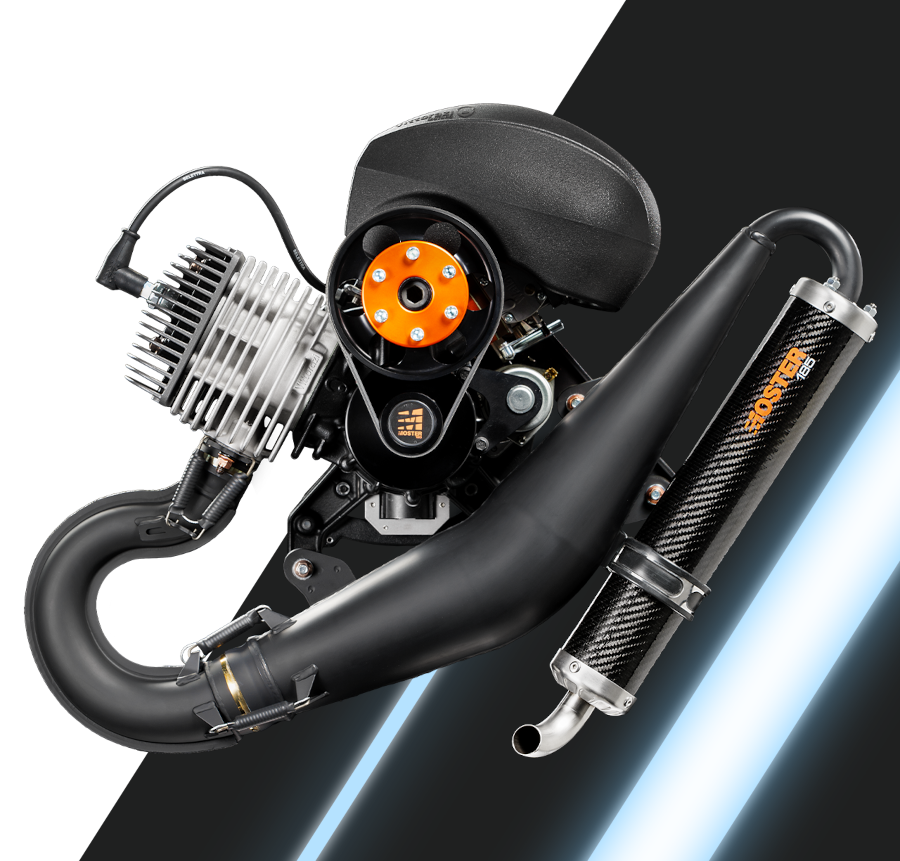
Vittorazi Moster 185
A single-cylinder, two-stroke, air-cooled engine built in Italy and one of the most flown in paramotoring, because it gets a lot of power from very little weight and keeps on running.
For this flight, what counts is fuel use. Vittorazi rates it at about 3.0 litres per hour at 30 kg of static thrust. Carrying 170 kg for 15 hours means flying at the throttle setting that gets the most kilometres from every litre.
PAP
One of the founding names in paramotoring. PAP stands for Propulsión Auxiliar Parapente and was one of the first paramotors produced commercially. It began in Marbella, so a Spanish brand is carrying a Spanish pilot.
[Chassis model / size · trike model · changes for the attempt]
70 litres
About 52 kg of fuel, nearly a third of the take-off weight. The machine gets some 50 kg lighter during the day, so wing, trim and throttle have to be re-tuned as the hours pass.
[Tank layout · transfer system · reserve]
~170 kg
Elevate Pulse 27. A new wing for an old record.
Elevate is the paramotor brand that Swiss manufacturer Advance launched this year, and the Pulse, an intermediate reflex wing, is its first. It is developed with the Advance design team and built in Advance's own production, to Swiss standards.
One more link to the trike: Elevate's team includes Nicolas Aubert, vice world champion and part of the family behind PAP.
[Why the Pulse for this flight: stability at trim under heavy load · efficiency · passive safety over 15 hours · launch with a loaded trike]
A record only counts if it can be proven.
The flight runs under the rules of the FAI, the Fédération Aéronautique Internationale.
[Name], appointed through [national body], Argentina. Checks the aircraft, seals the instruments, witnesses take-off and landing, signs the claim.
[Model, FAI/IGC approved] logs the entire flight, checked independently afterwards.
[Vario / GPS units] as a second, independent track.
The attempt is declared before take-off; after landing the file goes to the FAI for ratification.
One pilot in the air. Two teams on the ground.
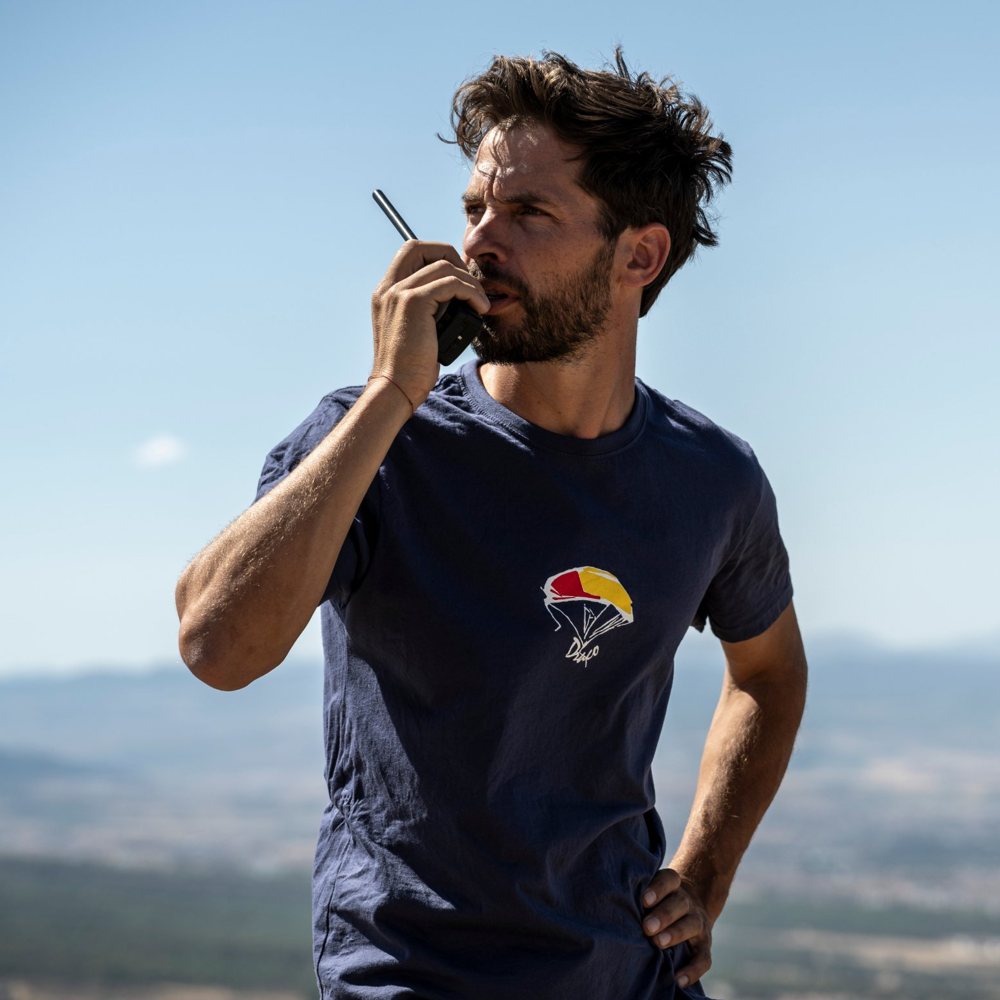
Carlos I. Peña
Carlos holds two FAI world records and has spent years flying where few people go, on paramotor and free-flight expeditions, many of them alongside Ramón Morillas.
He is a paragliding instructor at Draco and a BHPA Senior Instructor in paragliding, paramotor and dual flying. He is also a private aeroplane pilot and a skydiving instructor. Few pilots know the air from so many sides: under a wing, behind a propeller and in free fall.
Under a wing, behind a propeller, in free fall
7,250 m above Granada
On 23 December 2023, flying as co-pilot with Ramón Morillas from Cenes de la Vega, Granada, Carlos set two FAI world records in the foot-launched tandem paramotor class (RPF2T).
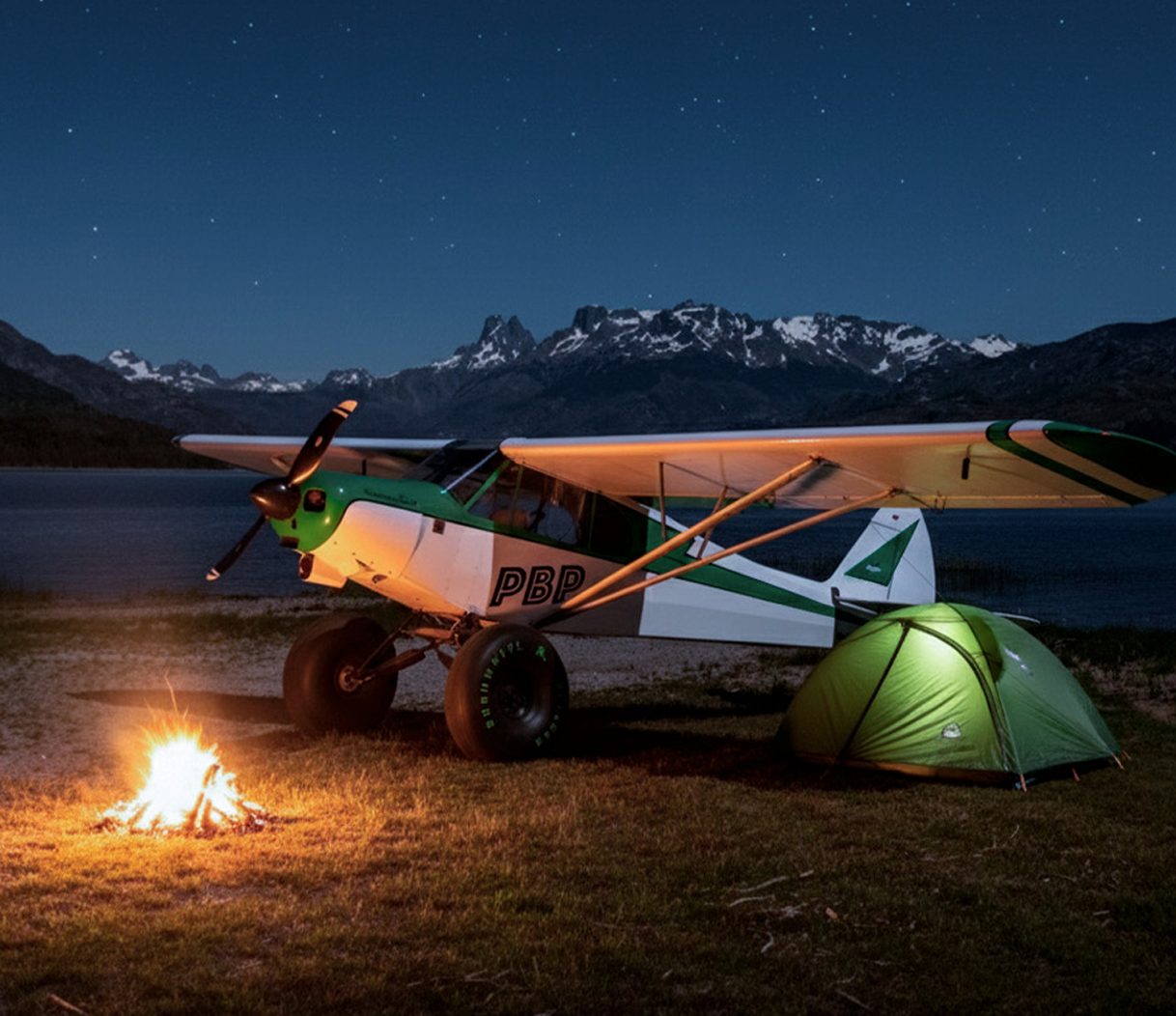
Patagonia Bush Pilots
Our base at the foot of the Andes. Patagonia Bush Pilots flies from Trevelin aerodrome in Chubut, over the rivers, lakes and forests of the cordillera, and teaches bush and mountain flying: landing where there are no runways and reading wind and terrain at low level. Their work helped make Trevelin Argentina's National Capital of Bush and Mountain Flying.
[Role in the attempt: base, hangar, logistics, local weather, chase aircraft, ground crew] · [Ezequiel Parodi, founder]
Draco, Granada
The school behind the pilot. For 37 years Draco has been teaching people to fly in Granada, in paragliding and paramotor. Today it is where Carlos trains and teaches.
Four-time world champion, former Red Bull athlete and two-time Red Bull X-Alps competitor. Ramón and Carlos have shared many expeditions, by paramotor and free flight.
Founder of Draco.
Every position, live on the map.
During the flight, live tracking via [provider] shows where Carlos is in real time. The attempt day is chosen at short notice from the forecast. Sign up and we will tell you the moment the window opens.
Fly with us.
[Partnership pitch: what partners get — visibility on the wing and trike, live-tracking audience, media coverage, content from the flight]